The historic El Bressol Bio Orange tree smallholdings are small, family-run plots that often do not exceed
one hectare in size, a smallholding structure that has remained unchanged since the beginning of orange
cultivation in the region in 1781.
Far from being a disadvantage, the smallholdings have allowed personalized care for each tree, preserving
traditional techniques based on intimate knowledge of the land and the life cycle of the orange trees.
Not only do our fields produce citrus, but they also keep alive a unique landscape where every element has
its role in a centuries-old ecosystem.
Irrigation systems, an Arab legacy, have left us unique infrastructure for extracting water from the river
Xúquer by gravity. The Carcaixent dam (L’Assut) is a 17 th -century hydraulic structure that is still fully
operational.
With the proliferation of orange groves in the 19th century, wells were dug to draw water using
waterwheels, initially powered by animal traction, later by steam engines, and finally by electricity.
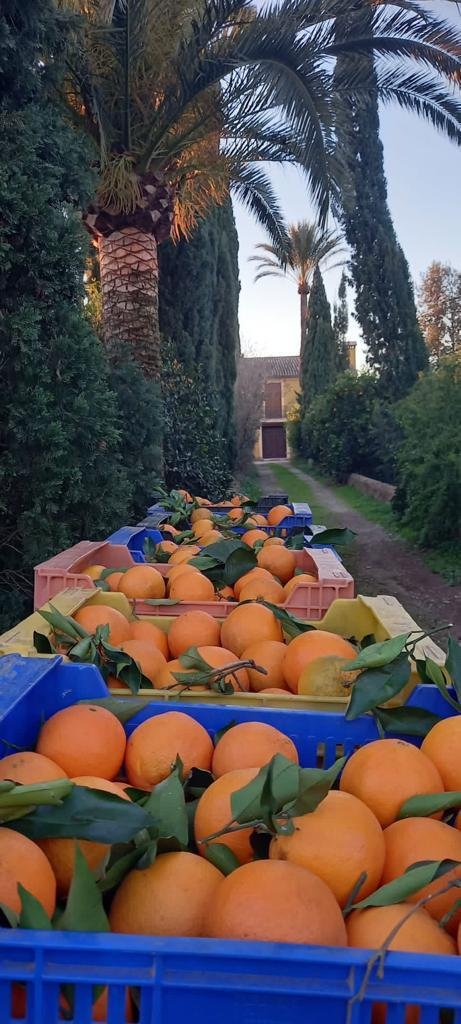
Many of the country houses, some with centuries of history, deserve special attention because they shape
a landscape associated with the orchard-garden—a concept of agricultural production found only in our
region.
Houses surrounded by Orange groves that still contain date palms and large trees, some of them centuries
old.
This landscape is part of the emotional heritage of many generations who have cultivated citrus fruits in the
region.
Our fields maintain paths with ancient stone walls, traditional irrigation ponds, and trails that form a unique
map of small plots.
Maintaining these infrastructures and the landscape is also part of our commitment to the environment
and tradition.
When you consume our El Bressol Bio products, you are helping to ensure that this heritage endures.